

Self-Care
Tension headache relief: what the evidence supports
The measures with the best track record are the dull ones: steady sleep, real meals, water, sane caffeine, and knowing when the painkillers have become the problem.
The short answer
Tension headache relief is mostly the dull fundamentals: steady sleep, regular meals, water, and caffeine under 400 milligrams a day, plus heat and gentle self-massage of the neck and shoulders. One headache can run 30 minutes to 7 days. Past 9 days a month, painkillers can make headaches harder to treat.
- to 7 days, how long a single tension headache lasts
- 30 minutes
- of caffeine a day, roughly 4 cups, can trigger headaches
- 400 mg
- of painkillers a month can make headaches harder to treat
- 9 days
- in the 2015 trial where massage did not beat a sham
- 56 people
- pooled in a 2013 review of 12 neck-pain studies
- 757 participants
- in the 2014 trial favoring sessions of 60 minutes
- 228 people

What counts as a tension headache?
Steady, mild-to-moderate pressure on both sides of the head, lasting anywhere from 30 minutes to 7 days. The National Institute of Neurological Disorders and Stroke (NINDS) calls tension-type headache the most common headache condition, ahead of migraine and the rarer attack types. Most people describe a belt tightening around the skull rather than a throb. For the great majority of these, tension headache relief does not begin with a prescription or a scan.
The chronic form arrives more often and can run from hours to days, sometimes close to constant. These headaches usually begin around puberty and peak in a person's 30s. The cause is not settled: NINDS points to a mix of genes, brain signals and muscle tenderness. The word "tension" in the name refers to emotional stress, which the agency calls an important trigger, because stress makes muscles in the neck, face, scalp and jaw contract. NINDS lists 6 more triggers: mental strain, too little or poor-quality sleep, dehydration, alcohol, sunlight, and postures that load the head and neck, such as reading, working at a screen, or looking down at a phone.
Confirm the diagnosis before following any of this, because the self-care below is aimed at one specific type. NINDS separates tension-type headache from migraine on 4 points: no pre-headache aura, no nausea or vomiting, no worsening when you walk or climb stairs, and sensitivity to light or sound but not both. A headache that throbs on one side, brings nausea, or gets worse with movement points somewhere else and needs a different plan.
Which tension headache relief measures do the most work?
Sleep, meals, water and a steady caffeine habit, roughly in that order. Mayo Clinic's self-care guidance for tension-type headache leads with lifestyle and gets specific: eat nutritious food on a regular schedule, skip no meals and least of all breakfast, drink plenty of water, and hold the same wake time and bedtime 7 days a week, weekends included. If you are not asleep within 15 minutes, Mayo advises getting up and doing something calming instead of lying there.
Sleep earns a second look because both sources add a wrinkle. NINDS notes that too much sleep worsens headaches as readily as too little, and that daytime naps cut into deep nighttime sleep and can trigger headaches on their own in some adults. Mayo flags sleep apnea by name: it can cause tension-type headaches, and the tell is waking with one in the morning. That pattern is worth an evaluation, since treating the apnea can ease the headaches at the source.
Exercise belongs on the list with a caveat. Mayo says exercise releases chemicals that block pain signals to the brain and names 3 options, walking, swimming and cycling, while advising a slow start, since exercising too hard can itself bring on certain headaches. Smoking gets its own line: nicotine reduces blood flow to the brain and triggers a reaction in the nerves at the back of the throat, and either change can end in a headache.
The schedule of your sleep, meals and water matters more than anything you can buy.
Does caffeine cause headaches or cure them?
Both, and the dose decides which. Mayo says caffeine may help curb a headache, which is why it appears in some headache medicines, while heavy daily use leads to them. The threshold is concrete: more than 400 milligrams a day, roughly 4 cups of coffee, can cause headaches and irritability, and regular use raises the risk over time.
Quitting is the other trap: it causes headaches whether you stop suddenly or taper gradually, per Mayo, and NINDS lists both caffeine and caffeine withdrawal among the things that set off an attack. Weekend headaches that arrive a few hours after your usual second cup are worth reading that way. The fix is rarely zero caffeine; it is a steady moderate amount most days rather than a 5-cup Tuesday followed by a dry Saturday.
Does massage help tension headaches?
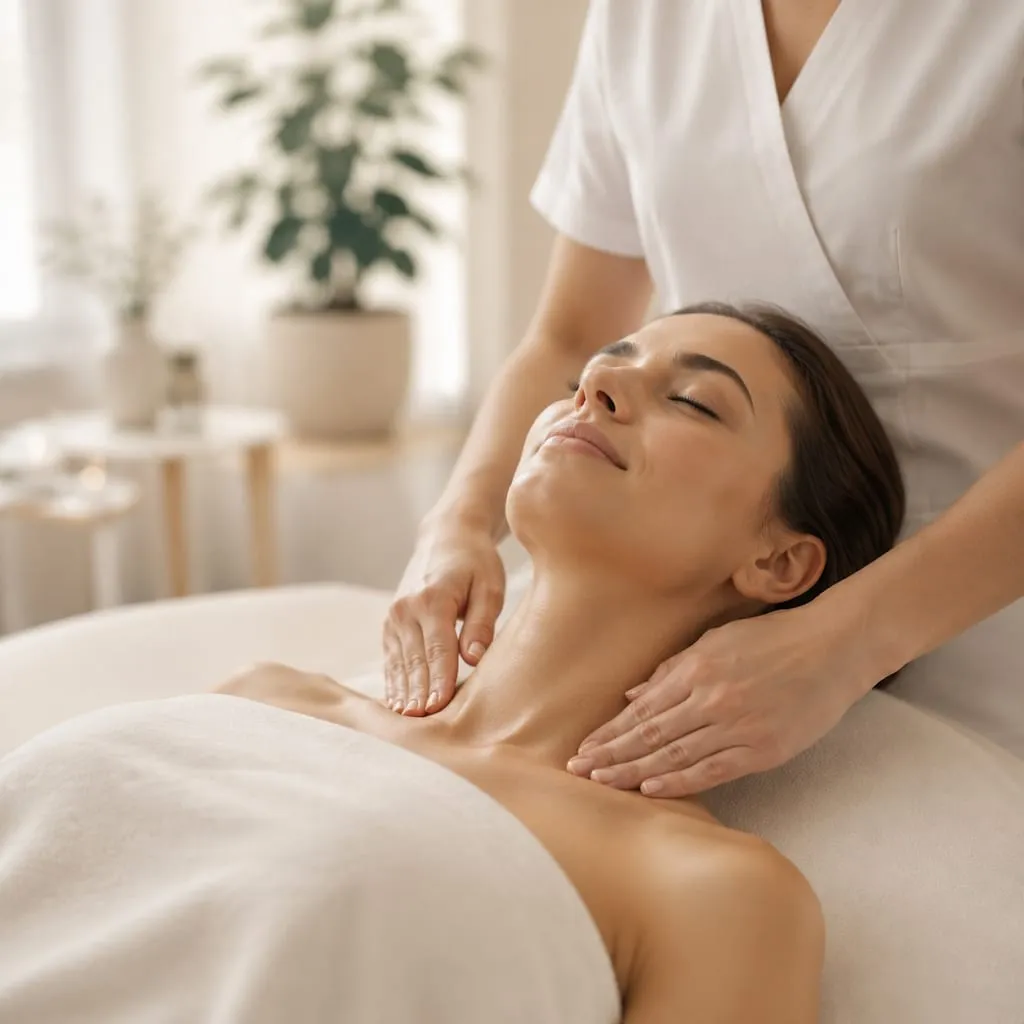
Less for the headache itself than for the neck and shoulders underneath it. Mayo's direct advice for muscle tension is heat, delivered 5 ways: a heating pad on low, a hot water bottle, a hot shower or bath, a warm compress, or a hot towel. The opposite works for some people too, ice or a cool washcloth on the forehead. Both are cheap and low-risk enough to try tonight.
Mayo's claim for massage is measured. Massage "also can relieve muscle tension — and sometimes headache pain," it says, then describes self-massage you can do with your own fingertips on the temples, scalp, neck and shoulders, along with gentle neck stretches. That is a modest claim, and the trial evidence supports keeping it modest.
NCCIH's summary of the science on massage counts only a handful of headache trials, and their results have not lined up. The most relevant is a 2015 randomized controlled trial of 56 people with tension headaches, split 3 ways: massage at myofascial trigger points, an inactive sham of detuned ultrasound, both twice a week for 6 weeks, or a waiting list. Headache frequency dropped in the massage group and the sham group alike, with no difference between them.
The weakness is specific to the headache outcome. NCCIH's stronger findings sit next door, in the muscles a tension headache lives in. A 2013 review of 12 studies and 757 participants found massage more helpful for neck and shoulder pain than inactive therapies, though not better than other active treatments, with the shoulder benefit holding short-term only. A 2014 dosing trial of 228 people with chronic neck pain tested how much is enough and found sessions of 60 minutes, given several times a week, beat fewer or shorter ones. So loosening a knotted neck and shoulder line has a reasonable case behind it, while erasing the headache itself does not.
NINDS lands in the same place, listing physical therapy, massage and gentle exercise among the additions a doctor can recommend to a treatment plan rather than among proven cures. The honest summary on tension headache relief: heat first, gentle self-massage of the temples, neck and shoulders second, and no expectation that either one reliably ends the headache.
Headache frequency fell in the massage group and the sham group alike, with no difference between them.
| Approach | What the evidence says |
|---|---|
| Steady sleep, meals and water | Mayo Clinic's first-line self-care; NINDS lists poor sleep and dehydration among the triggers |
| Caffeine, kept moderate | May curb a headache, but over 400 mg a day, or withdrawal, can cause one |
| Heat or cold | Mayo's direct advice for tense neck and shoulder muscles; cheap and low-risk |
| Self-massage of temples, neck, shoulders | Mayo: can relieve muscle tension, and sometimes headache pain. Modest and low-risk |
| Professional massage for headache frequency | 2015 trial, 56 people: no better than a sham; NCCIH calls the results inconsistent |
| Massage for neck and shoulder pain | Short-term benefit in a 2013 review of 12 studies, 757 participants |
| Longer, more frequent sessions | 2014 trial, 228 people: sessions of 60 minutes several times a week beat shorter ones |
Can painkillers cause headaches?
Yes, past a threshold both sources name. Mayo's number is specific: over-the-counter pain medicine on more than 9 days a month can make headaches harder to treat, and at that point the advice is to see a health care provider rather than keep medicating. NINDS states the principle more broadly, warning that regular overuse of headache medications can worsen attacks or create new headache symptoms, and recommends working with a doctor on a plan for safe medicine use.
This is the quiet route from a manageable headache problem to a chronic one. You take something, the headache returns, you take more, and the medicine can start generating the next headache in a loop that hides its own cause. Counting the days is the only guardrail that reliably works, and reaching for painkillers a couple of days most weeks already puts you near Mayo's line; that frequency is worth raising with a clinician on its own, separate from whatever set the headaches off in the first place.
How do you find your own triggers?
Write them down, because memory will not do it. Mayo and NINDS push the same low-tech tool, a headache diary, since triggers are personal and you will not notice that yours follow short sleep or a skipped lunch by trying to recall it a week later. Mayo keeps the diary simple: when the headache started, what you were doing, how long it lasted, what gave relief, then look for patterns in your daily habits.
NINDS asks for more, and its version is worth following if you can keep it up. After each headache, record these 6 things:
Two weeks of honest notes usually surfaces a pattern that guessing never would. The diary does double duty. It guides your own changes, and NINDS notes it helps a doctor pin down the headache type and choose a treatment. It also exposes any medication use you have been rounding down.
- The time of day, plus the headache's intensity and duration
- Any sensitivity to light, sound or smells
- What you were doing right before it started, and any medicines taken
- The quality and length of the previous night's sleep
- Any stress or strong emotion beforehand, plus weather or routine changes
- The food and drink from the previous 24 hours; people who menstruate can also mark their periods
When should you stop self-treating?
When the headache stops behaving like an ordinary one. NINDS names 10 warning signs that mean calling or seeing a doctor right away: a sudden, severe headache, possibly with a stiff neck; a severe headache with fever, nausea or vomiting not tied to another illness; a "first" or "worst" headache that also brings confusion, weakness, double vision or loss of consciousness; a headache that worsens over days or weeks, or changes its pattern; a headache after a head injury; a headache with loss of sensation or weakness anywhere in the body, which can signal a stroke; a headache with convulsions or trouble breathing; two or more headaches a week; a constant headache in someone who never had headaches before, especially over age 50; and new headaches in someone with a history of cancer or HIV/AIDS.
NINDS also advises talking with a doctor any time headaches affect daily life, and getting care for headaches in children that keep returning or that follow a brain injury. For children, check with a doctor before giving any headache medicine, and seek care quickly for a headache that arrives with a rash, fever or sleepiness.
One safety note, since massage is on the table. NCCIH puts the risk of harm from massage as low while recording rare serious side effects, naming 3: blood clot, nerve injury and bone fracture. The reported cases have often involved vigorous techniques such as deep tissue work, or people already at higher risk of injury. Gentle fingertip work on your own temples is nowhere near that, and skilled hands should stay inside what the tissue will take.
If you would rather someone else found the knots, the Neck, Shoulder & Head Pain Relief Massage at Sweet & Smile Massage spends the whole appointment on the base of the skull, the shoulder line, the upper back and the scalp: 60 minutes for $90, or 90 minutes for $130. We are at 6175 Mission St, Daly City, open daily 10 AM to 9 PM, and the desk takes calls at (415) 916-3282. Walk-ins are welcome when a room is free, though evenings fill first.
The most useful thing you can do this week costs nothing. Work through these 6 steps in order, and give them 2 weeks before deciding that nothing helps:
- Pick a fixed wake-up time and bedtime and hold them every day, weekends included
- Drink water on a schedule and eat breakfast, rather than letting meals slide
- Keep caffeine steady and moderate instead of bingeing and crashing
- Write down every headache along with the hours you slept the night before
- Reach for heat and gentle self-massage of the neck and shoulders when the muscles tighten
- Watch the painkiller count, because past Mayo's monthly line the pills may be the problem
Questions people ask
How long does a tension headache last?
A single tension-type headache can last anywhere from 30 minutes to 7 days, per NINDS. The pain is usually mild to moderate and felt as steady pressure on both sides of the head. The chronic form shows up more often and can run from hours to days, sometimes close to constant. These headaches typically begin around puberty and peak in a person's 30s.
Does massage work for tension headache relief?
The honest answer is modest. In a 2015 trial of 56 people, trigger-point massage twice a week for 6 weeks cut headache frequency, but no more than an inactive sham did. The better evidence sits next door: a 2013 review of 12 studies and 757 participants found short-term relief of neck and shoulder pain, and a 2014 trial of 228 people found sessions of 60 minutes beat shorter ones. Loosening the muscles feeding a headache is a reasonable goal; erasing the headache is not.
Can caffeine cause tension headaches?
Yes, in both directions. More than 400 milligrams a day, roughly 4 cups of coffee, can cause headaches and irritability according to Mayo Clinic, and regular heavy use raises headache risk over time. Withdrawal is a trigger too, whether you quit suddenly or taper gradually. The practical fix is a steady, moderate daily amount rather than heavy weekdays followed by caffeine-free weekends.
How often is it safe to take painkillers for headaches?
Mayo Clinic's threshold is 9 days a month: using over-the-counter pain medicine more often than that can make headaches harder to treat. NINDS likewise warns that regular overuse of headache medications can worsen attacks or create new headache symptoms. Past that line, the next step is a health care provider and a safe-use plan rather than a stronger pill.
Which massage is best for headaches that come from desk work?
The Neck, Shoulder & Head Pain Relief Massage is the one built for it, since the whole appointment stays on the base of the skull, the shoulder line, the upper back and the scalp instead of covering the whole body. It is $90 for 60 minutes at Sweet & Smile Massage in Daly City. It may ease the muscle tension feeding a headache; no massage is a headache cure.
When should I see a doctor about headaches?
Right away for a sudden severe headache, one with fever or a stiff neck, one after a head injury, one with weakness, confusion or vision changes, two or more headaches a week, or a new constant headache, especially over age 50. NINDS also advises talking with a doctor any time headaches affect your daily life.
Sources
- National Institute of Neurological Disorders and Stroke — Headache
- Mayo Clinic — Tension-type headaches: Self-care measures for relief
- NCCIH — Massage Therapy for Health: What the Science Says
Written and fact-checked by the Sweet & Smile editorial team against the primary sources above. Sessions at our Daly City studio are performed by experienced massage therapists.
This guide is for general education only and is not medical advice. Talk with your healthcare provider about what is right for you.
Neck, Shoulder & Head
Headache riding on a tight neck? That is an hour we can spend well.
The Neck, Shoulder & Head Pain Relief Massage works the desk-and-phone triangle rather than the whole body: base of the skull, shoulder line, upper back, scalp. It is $90 for 60 minutes and $130 for 90, and every massage booking here includes hot stones, cupping and a hot compress at no extra charge. Tables are oversized, so your arms rest on the table instead of hanging off, and a Levoit air purifier runs in every treatment room. It may ease the muscle tension feeding a headache, and we will not pretend it is a cure.
Sweet & Smile Massage · 6175 Mission St, Daly City, CA 94014 · (415) 916-3282 · Open daily 10 AM – 9 PM.
Keep reading
Choosing a massage therapist
What to ask before you book, and why the answer about pressure matters most.
Read
Massage for back and neck pain
The neck and shoulder evidence is stronger than the headache evidence. A closer look at both.
Read
Late massage in Daly City
We are open to 9 PM daily, which is usually when a day at a screen catches up with you.
Read